Guest Post: ‘Swimming Against the Tide’ by Linda Ervine.

Sitting on a shelf in my living room is a beautiful and meaningful gift that I was given by a friend this Christmas.  It is an ornament in the shape of a log with seven tiny blue and white delft fish swimming above it.  When you look closely you realise that whilst six of the fish are all swimming in the same direction one solitary fish is swimming the opposite way to the others.  Attached to the log is a sign in Gaelic which reads ‘Ag snámh in éadan an tsrutha’ which translates as ‘swimming against the tide’.

And I am proud to be doing just that, to be swimming against the tide of intolerance that at times seems to engulf Northern Ireland.  In my position as Irish Language Development Officer I have the opportunity to work with groups from both traditions and to challenge the stereotypes of green and orange politics.

But being out of step with what appears to be all around you can be difficult.  By becoming an advocate for the Irish language I have made myself a target for criticism and attack from those who disagree with the stance I have taken.  I have experienced criticism from individuals within the unionist community as well as lack of support and misunderstanding of the purpose and ethos of my work.

However it isn’t the disapproval of strangers or the negative comments on social media which I find most hurtful, but the dirty looks and whispers among people that I know especially when those people are fellow Christians. Part of me wants to ask them what they think is so wrong about what I do.  I want to explain why and how I got involved with the language. I want to tell them that four years ago I was introduced to a language which because of my religious background I had never had the opportunity to engage with; that I became fascinated by it and decided to learn to speak it.  That I fell in love with its sounds, its phraseology and discovered its true history. That I read books such as ‘Presbyterians and the Irish Language’ by Roger Blaney, ‘Hidden Ulster: Protestants and the Irish Language’, by Pádraig Ó Snodaigh and ‘Towards Inclusion: Protestants and the Irish Language’ by Ian Malcolm and I discovered that I as a Protestant could rightfully claim this language as my own, a truth I believed was important to share with others. I want them to hear the laughter of learners and experience the positivity and friendliness that is Turas, but stone faces and closed minds make this impossible.

Since setting up Turas, East Belfast’s Irish language project, I have met many people who like me, feel they have been denied access to the Irish language but who now through Turas, enjoy the opportunity to attend classes in their local area.  Turas, which is the Gaelic word for journey, has become not just a journey into a language but also a journey that is changing mindsets and softening hearts, eroding long held negative attitudes and providing a new context for the Irish language as a language of healing and reconciliation.

At times I feel despondent at the political situation in Northern Ireland.  Sixteen years after the Good Friday Agreement we seem even deeper entrenched in bitterness and hatred.  Almost half of the electorate do not vote and feel no motivation to engage with the political system. What chance is there for change when at the highest levels of our society the conflict continues? How can communities be expected to show tolerance and respect when their political leadership express intolerance and disrespect? How can the walls come down when division is being rebuilt every day within our Assembly?

Yet despite all of this I firmly believe that the majority of people in Northern Ireland want something better and in our own small way the success of Turas confirms that many are looking for an alternative. The reality is that I am not the only fish swimming against the tide, there are many other people in Northern Ireland who desire peace and seek compromise on the contentious issues. I am not a solitary fish but part of a silent shoal swimming in the direction of a modern and pluralistic society.

Posted in Uncategorized | Tagged , , , , , , , , , , , , , , , | 11 Comments

Word Up, Part 2.

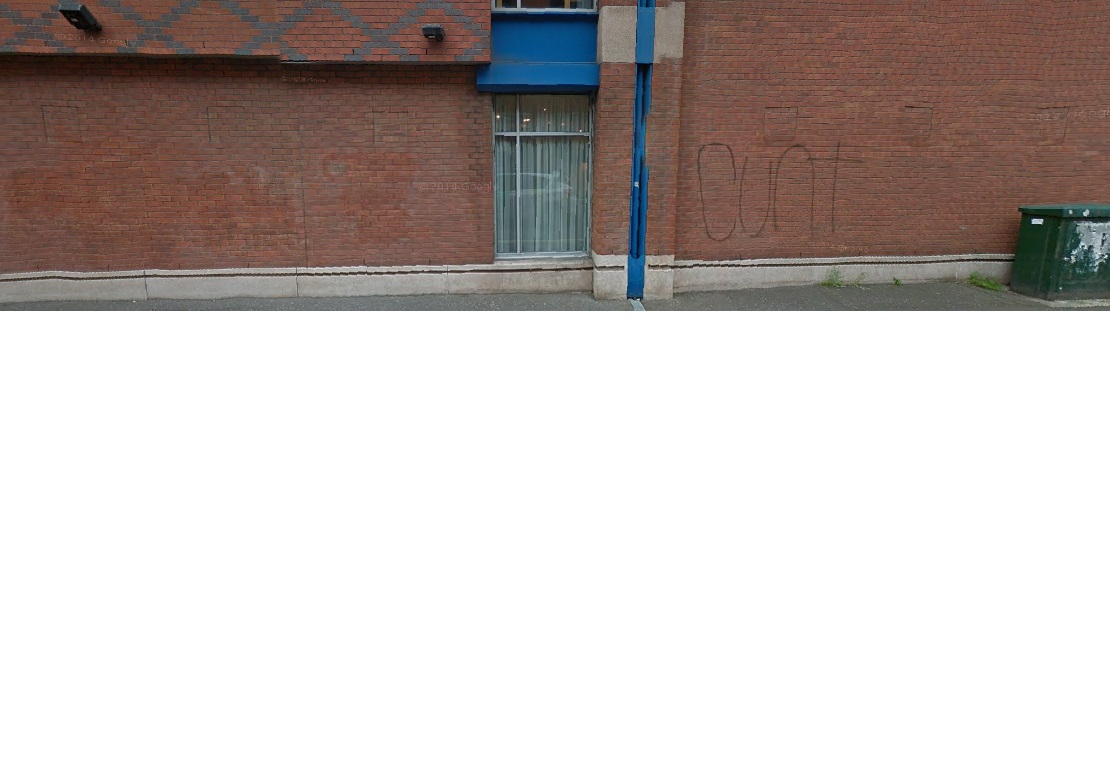
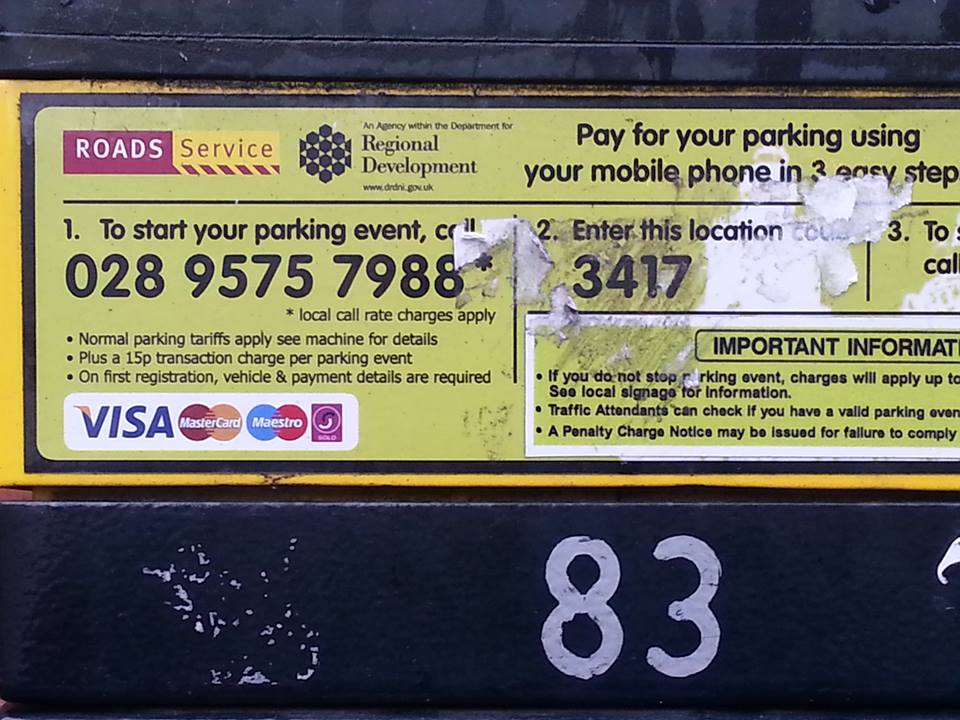
The parking meter at the top of Wellwood Street, just off Great Victoria Street, had been adorned with a small rectangular sticker. In black writing on a silver background, it stated: You are beautiful. It was positioned at just the right place to be easily seen, on the black background just below the instructions. I always felt grateful for this little nugget of positivity on my way to sign on the dole at Conor House around the corner; being told you’re beautiful, even if it’s in a non-personal way, is a great thing. In fact, the generality of the message, the way it was intended for everyone, was beautiful in itself.

Vernacularisms Word Up 2

The sticker’s placement and continued survival (often accompanied by parking tickets with time left on them) filled me with pride for the people of Belfast; it was an example of the generosity of spirit and optimism that was all too often lacking in a society racked by austerity, sectarianism, intolerance, and political intransigence. I don’t know who finally decided that we weren’t beautiful, or that we shouldn’t be told that we were, but the sticker was eventually removed. Against the odds it had survived for nearly a year, despite the fact that it could easily have been removed by hand: it was too good for this life. Cunt, on the opposite wall, is still there.

Vernacularisms Word Up 2.1

Posted in Uncategorized | Tagged , , , , , , , , , , , , , , , , | 4 Comments

Guest Post: ‘Belfast to Derry/Londonderry’ by Jan Carson

It is impossible to be Northern Irish on a train.

On the surface you carry yourselves like a private funeral; paperback on your side, on his, a small sheet newspaper, unfurled. You note his newspaper. He notes your novel. You draw your own stray conclusions. They catch like hang nails and you remember the first time you heard a stranger curse, saw a drunk man, falling outside the People’s Park; realised that other people were not the same as your people. You pray that Mossley West and Antrim leave you be, content to stew in the grace afforded by empty seats. You place your bag, a Berlin Wall to the left. Engrossed in the sports section he misses the cue, leaving himself open to the advances of a large lady, with shopping. She sits, stretches and arranges her carrier bags like curious children around her feet. On the surface you are still a Presbyterian handshake: novel, newspaper, the addition of a takeaway coffee, each keeping carefully to its own small corner. Beneath the table you are knees and thighs straining against the lusty tracks, thrown backwards and viciously forwards, terrified by the prospect of an illicit clash.

It is impossible to be Northern Irish on a train. Jammed and sandwiched with no means of vetting the neighbours you are too close for politics. You nod once on arrival, once again on departure. Anything further might be misinterpreted.

Posted in Uncategorized | Tagged , , , , , , , , , , , , | 1 Comment

Word Up, Part 1.

Cunt. It’s sprayed in round childish letters about 4 feet in height on the wall in Wellwood Street, just off Sandy Row. The black paint has been applied with some skill: the lines are consistently of the same thickness, and there are no breaks or runs, which suggests that the can was held in a steady hand that moved fluently and rapidly without hesitation. Despite this, the script is not cursive; the four letters stand individually. The final ‘t’ is straight, the artist choosing not to use a curved upstroke to finish off the stem; it also overlaps the preceding letter slightly. These two elements are out of keeping with the rest of the work, suggesting that the final letter was executed more rapidly than the preceding ones, and that the artist abandoned the script and spacing in order to get the work finished more quickly. Given the nature of the work, and its location near a busy street it is probable that they were either disturbed in the act of creation and had to run, or that they anticipated being caught, and finished the job in haste.

Although the script is naive, it is not the work of a child: the fluidity of the writing and its position on the wall puts it physically and practicably out of the reach of small people. There are no joins or breaks to suggest the work was performed with the help of shoulders or a piggyback. This is the work of a reasonably tall and experienced person.

It’s been there for several years.

No attempt has been made to remove it. Further along the wall you can see where other spray-painted messages, maybe naming touts and housebreakers from Sandy Row, have been removed. Even during Belfast City Council’s war on the fly-posters, whose blocks and rows of A3 day-glo gig adverts were censored with black paint, the graffito endured.

But what is the message?

Was it aimed pejoratively at one of the office workers whose windows look out directly at the wall? If so, it was well placed. However, since it doesn’t name anyone the message could be easily overlooked by its intended recipient. It is, of course, possible that the relationship between the artist and the recipient was explicit enough for the message to be understood without the need for further elaboration. For example, a disgruntled worker who had been sacked the day before could have left it as a parting riposte to their manager, who would in all likelihood understand that they were the target.

Perhaps it was intended for all the workers in the office as a general, again pejorative, reference to all office workers in the building, left by someone with a hatred of the company, the job, or the socio-cultural milieu(x) within the building. If the last letter was somewhat rushed, this may mean that the statement is unfinished, and that a final ‘s’ was intended, but never written.

The most probable reason for the appearance of this word on a wall is that it was done by a person in their early teens, either for a bet, or just for the thrill of writing a ‘rude word.’ This would explain the childlike-quality of the hand and the mise en page. However, the expert use of the spray can suggests that this was not such a straightforward case. Let us imagine a scene where the artist (let’s assume he’s male and called Jonty) has had the can thrust into his hand and been urged to go and spray something offensive on the wall. If he does so, he will gain respect from his peers. He has probably taken Buckfast tonic wine, super-strength cider, or sniffed from the glue bag. As Jonty approaches the wall a surge of adrenaline rushes through him, negating the effect of the alcohol or glue, and replacing it with a frisson he has never known before. As a result, he does not feel comfortable or relaxed, and his hand is shaking. He is inexperienced in the art of spraying paint on walls. As his hand wavers, he hesitates; blue flashing lights reflect off the shop windows on Great Victoria Street and he finishes up quickly. The letters are ill-formed, inconsistent in width and height. There are joins, and the paint blotches and runs in rivulets where he has paused, uncertain of his work. In short, it is amateurish. While we cannot rule out  factors such as luck and innate natural talent, this does not seem to be the work of a first-timer, even if on the surface of it this is the most logical theory.

So far, all the possible motivations for the graffito have been negative, which is of course in keeping with the word’s negative associations in modern society.

But what if we choose to read this graffito in a positive way? What if it is not intended to be abusive or offensive, but is instead a Sheela-na-gig for our times, an encouragement to reflect upon the gateway to life, the place from which all humanity comes? Perhaps it is no less than an attempt to reclaim the word itself from the abusive and offensive usage it commonly has today. Painted as it is, without other contextual information, it invites us to meditate and interpret, to consider the word in different ways, to inscribe our own meaning. I prefer this reading; maybe the City Council agrees.

Wellwood St

Posted in Uncategorized | Tagged , , , , , , , , , , , , , , , , , , , , , , , | Leave a comment

Guest Blog: ‘A Constellation of Belfast Nicknames’ by Aisling O’Beirn.

Click on the image to view it in your browser.

Belfast Nicknames Aisling O'Beirn

You can find out more about Aisling and this map here.

Posted in Uncategorized | Tagged , , , , , , | Leave a comment

Drama.

Loaded gun. Never fired. Sorry, Chekhov.

Posted in Uncategorized | Tagged , , , , , , , | 1 Comment

Hanging up the Boots

The veterans are uniformed in dark suits with black ties; there are no medals. They sit at the back like the bad boys on the bus, chattering slightly too loudly during the minister’s opening gambit. The lads are venerated, and so have to police themselves. After a few final impish moments one holds a finger to his lips, allowing the sermon to swing into full flow.

Reverend Billy has been tending his flock well. Known them for years, he has, and he’s done a good job; always out round the parish, looking in on them, delivering kind, sensible words, and harvest-season produce. I’ve met him at the doorstep a few times and chatted. He’s brusque, forthcoming, and kindly.

I have no idea what the hymns should sound like, but unlike many services I’ve attended, this congregation knows them and they sing out loud with pride. I mutter the words self-consciously, quietly, out of tune, wondering if this is a generational thing.

Billy knows his football. He recognises and acknowledges the ones in the assembly: Linfield’s manager and chaplain; the former team mates; the sons and daughters. Billy’s got stories. Some of them I’ve already heard from Gerry himself, conspiratorially shared in a guldering whisper by the front door of a damp Belfast afternoon. Others I didn’t know, like Gerry’s 100% record for The Blues: played one, scored one, against Man Utd. Or the ‘expenses scandal,’ when he put in a bill for, what, five shillings, and was asked did he come to work via America. Apparently the bus from Donegall Pass to Celtic Park was 2d in old money.

Over tea and a sandwich at the back of the church Jimmy Donnelly tells me he’s now the last one left of Belfast Celtic. Gerry was a nippy wee outside right, never stopped running, had great pace. Ask anyone and they’ll tell you that if Gerry had been playing today he would have been up there in the firmament with the best of them.

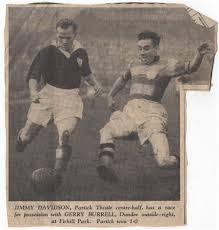
Gerry Burrell

Gerry Burrell (L) playing for Dundee.

We’re talking to Gerry’s widow, as strong a woman as you’d ever meet, turned ninety just two months before her husband. She’s tired and with failing eyesight can barely see Jimmy, so he has to introduce himself. He mentions that he’s a catholic and before he can continue she takes the words out of his mouth: she and Gerry were never bothered by any of that stuff, thank God. He accepted everyone, no matter what race or religion.

See them assembled here, the old comrades, their sons and daughters. The still air is peopled by their spirit; love, memories, and banter are shared. There was no money in the game back when they were at the top of it: no Twitter revelations, no Maseratis or Mohicans, no aftershave adverts. A heavy leather ball, a few quid, and a steamer voyage to America on tour if you were any good. Truly a different ball game.

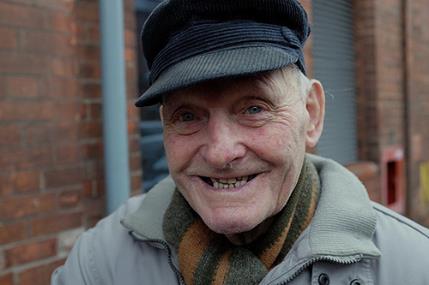
Gerry Burrell

Gerry Burrell. Picture by Moochin’ Photoman.

Posted in Uncategorized | Tagged , , , , , , , , , , , , , , , , , , , | 4 Comments

Guest Post: ‘The Days I Remember,’ By Larry Mac.

I went to school away up the back of the Shore Road. St Aloysius. Near Bearnageegha. I think Barny was a better school. Everybody knew it was. But sure, a school is a school no matter what type of education you get. Well, that’s a matter of opinion, but you know what I mean.

The bus would pick up people from all over the place: Short Strand, New Lodge, Harper Street.

One day, I was about 12 or 13 – usually the bus collected me at the end of the street, on the Ormeau Road, around 9 o’clock. One day the wee bus assistant woman, Mrs W, wasn’t there. I got on and I heard a fella who sat three seats away from me, Francis, say to me: ‘I fixed it for you to fight with me.’  Mrs W would usually try to break up the fights, so because she wasn’t there everybody was fighting. I saw somebody hitting someone else and it looked like the fellas behind Francis was waltzing. The guy’s fist missed the fella’s ear and hit Francis on the mouth, knocked him flying.

The bus went on, picking boys up from Short Strand. I thought: ‘I’ll talk to the driver, get away from the fighting.’ I just didn’t bother being involved in this crew. Kept out of it. Sure that’s always the way. You keep away from trouble no matter what it takes. That’s life isn’t it?

Two more boys got on the bus and they said to me ‘What’s going on?’ I said, ‘A few of the lads are having a wee punch up. Ach I’ll be with you in a minute.’ They ran up the bus and jumped on the whole lot of them.

We had to drive through town, towards City Hall. The bus driver says to me: ‘As soon as I shout “NOW,” you grab that pole,’ pointing to the pole beside the door (it looked like a copper tube, but it was a silvery colour.) I wondered what was going to happen. I grabbed the pole, he jumped on the brakes and the whole bus jerked. I thought I was gonna go through the window. There was a big Perspex sheet which I hit and bounced off. The others were swung all over the place. The fella at the very back got an elbow in his eye. He had a black eye for three weeks.

‘That’ll teach yous to fight on my bus!’

Once one of the fellas destroyed Mrs W’s shoes. He rolled up a comic, pretending it was a big cigar. He lit it and breathed in: there were flames all over the place. She punched him in the face so he would drop the comic. She had to jump on it to put it out. Her shoes were destroyed. She was cracking up, she had to buy new shoes (£49!) There was no smoking after that for a few days.

A few days later I heard: ‘What’s T doing on the bus?’ T was the principal. Sometimes he appeared on the bus to see how everybody was. ‘Ah Mister T can we smoke again?’

He just said, ‘All smokers to the back.’

I quit smoking before I even went to secondary school. The price had gone up. You know the way with the Budget they put up the price of fegs, drink and booze and stuff like that. I quit smoking for the right reasons. I quit when I was ahead.

Some of them were from the orphanage on the Ravenhill Road. It was called a ‘home’ but it was a real orphanage. Ach they were hangers-on, people looking for to be fostered out. Some were horrible and some of them were really strange. I was friends with a few of them. There was a wee girl: O’Donnell. She was fostered by the people in the next street. Another wee fella was fostered. He still lives down the road. Down below the bridge. I’ve seen him about.

Phillips was my friend. He said to me ‘would your mummy not foster me?’  I convinced my Mum have him for tea to meet him. But I knew he was involved in bad company, he wasn’t Mum’s cup of tea.

When we were having tea he said to me ‘I’m involved in a wee gang. Why don’t you join us next week?’ I thought ‘well, I’ll say nothing.’ My mum said: ‘You’re not joining no gang, over my dead body.’

They’re all gone now. You either keep in touch with your friends or you don’t.

Posted in Uncategorized | Tagged , , , , , , , , , , , , , , , | 3 Comments

The Selfish Gene?

“How come some people get away with it?”

“Get away with what?”

“They don’t suffer from unhappiness.  Sure, they get pissed off every now and again when something goes wrong, but it’s temporary, a wee setback that doesn’t have any long-lasting effects. They always seem to come out the other side smiling, no matter what life throws at them. Just laugh it off.”

“You’re talking about rich people, right? They’re happier than the rest of us.”

“Yeah well, obviously not worrying about where your next meal’s coming from is going to make you happier, but that’s not what I’m getting at. It’s a more general thing, like, you know, an attitude to life. Maybe unhappiness is the wrong word. Because you can still be happy and have this … I don’t know how to describe it … this darkness that lurks behind everything you do. Gives everything an edge. Sometimes it’s quiet, thinly-drawn, and you’re barely aware of it, and other times – obvious times when you would expect it – it howls at you like a lost soul trapped at the bottom of a well. It never quite goes away. It’s like, one day it hits you, bang, like a bullet out of nowhere, and you realise that you’re not carefree anymore; that part of you has gone. And you’ll never get it back. You’ve accrued this … residue of negativity from the experiences you’ve had. And it’s always there, casting some sort of shadow. Do you see what I mean?”

“Hmmm. You alright? Are you talking about depression here?”

“No. It’s not that; at least not in my case. I’ve been depressed in the past alright, don’t mind admitting it; sure you know what happened. But this is something different. Like I say, it’s to do with those things that life throws at you, like bereavement, or being on the wrong end of someone’s cruelty, or even doing something bad yourself. Some people seem to deal with it easily and be able to sail through life no bother, while the rest of us don’t. You know the ones I mean, the ones who just suck it up and get on with life as if nothing had ever happened to them.”

“Aye, I get you now. Like your man Brian whose girlfriend dumped him after, what … five years, to go out with his mate, and right away he was all over town having a ball? Just accepted it and moved on. Got another child now, so he has, happy as Larry.”

“Exactly right. How come that whole episode didn’t permanently scar him?”

“How do you know it didn’t, though? He might just be good at hiding it, or maybe he’d a good way of getting over it … it’s difficult to tell … what I’m saying is: you can’t know for sure what’s going on in someone else’s head.”

“OK, I can accept that. But I think there are certain types of people who are just naturally able to cope better than others. Remember on the news a while back there was that woman in France, the oldest woman in the World or Europe or something. Over 110 years old and still going strong. Smoked and drank all her life. When they asked her what the secret to her longevity was, she said that she only looked out for herself. Always. She was totally selfish, never cared what happened to anybody else at all. That’s the sort of person I’m talking about.”

“So, what, selfish people live longer because they don’t get stressed out about what happens to other ones, they just look after themselves? They don’t see anyone else as important, so they can deal with things better? But surely shit things happen to selfish people as well, like their ma dying or whatever?”

“Oh yeah, of course, but I reckon they have a different reaction to things like that. Because they’re so self-absorbed and insensitive to the world around them, they don’t feel things so deeply. So they’re better able to shrug off life’s adversities. And because they don’t really care about anyone else, they’re more likely to be the ones handing out the cruelty rather than being on the receiving end of it. You see what I mean?”

“Dunno. I think you’re generalising. It’s too easy to just categorise humanity like that. It’s much more complex than you’re making out. You know, in psychological terms we’ve all got a little bit of some kind of madness going on with us, it’s just a case of how much. A friend of mine’s a psychologist and he told me that. There are ones out there who do things that are psychopathic, like play head games with their other half, deliberately torture them mentally, you know the sort of thing. But they don’t take it so far that they’re running about with an axe, or building dungeons in their cellar like yer man out of Silence of the Lambs.”

“See, that’s exactly what I’m talking about. Those people who go around handing out minor – and maybe not so minor – cruelties, without a single thought about the impact of what they’re doing, just enjoying the power trip. They couldn’t give a toss about anyone else, and they don’t ever be unhappy because they don’t empathise. They don’t have any frame of reference for human misery … they don’t really understand it. Because if they did, they wouldn’t do the things they do. They’re the ones that live forever.”

“Yes … I think you’re partly right. What I’m saying is that there are degrees of it, so it’s difficult to generalise about it. Without a doubt there are people out there who have psychopathic or sociopathic urges, who do shitty, nasty things, and although they can’t really empathise with their victims, they still have a sense that what they do is wrong, because society tells them that. They know there are rules. So they go to church, do charity work, devote themselves to peacemaking or whatever, to try and compensate for their bad side. They manage to keep the lid on it somehow. Actually, it’s kind of paradoxical: the fact that they have these evil urges makes them of benefit to society as a whole. The damage is confined to a few unlucky people, and the African babies get a food parcel … it’s not as straightforward as you’re suggesting.”

“You’re talking from experience here…”

“Ah well, I’m sure you know the story. We’ll not go into it. But I bet she lives to be 100 at least, going by your theory. Total melter.”

“Ha. That’d be right, I’m sure. But here, can’t philosophise about it all day. I don’t see either of us making it to 50 never mind 100 in this friggin’ place, do you?”

“No. You’re right there.”

“That’s us. You can pull in by that lamp-post … you ready?”

“Yep. Born ready.”

“Safety off? Let’s go.”

Posted in Uncategorized | Tagged , , , , , , , , , , , , , , , , , , , , , , | 8 Comments

Guest Post: ‘City Isles,’ by Ceardha Morgan.

I chart the city by its parks; green islands linked by the redbrick roads. An archipelago of forty, founded by city fathers many years ago in benevolence and self interest; oases amongst the mills, factories, shipyard smoke, noise and the crashing sound of profit.  Mens sana in corpore sano; keep the masses healthily in check; burn off any subversion in airy landscaped grasslands, bound by iron and locked at night.  Allow for the mingling of merchant and navvy on a Sunday.  Sitting at bandstands and splashing on boating ponds. The ideal of recreation for a higher purpose; to commune with nature; where games can be played, by the rules and under watchful eyes. Benign paternalism; let those who toil have reprieve in God’s air.

Ceardha Morgan

Victorian endeavour in the mercantile city from the 1860s on, buying from the landed classes the parcels they cannot keep, planting and supplanting those whose names still echo on the squares and streets. Look at the pictures you can find online, top hats and parasols and stonefaced children staring down the camera; so distant in time and experience.  Yet look; there’s the Palm House. Just as it was when I passed it last week.  There’s Dunville Park’s fountain (in flow!); a place serene and cultivated, with a mill stack looming behind.  You look closely and you recognise.  And you know how they felt, those figures in the pictures.  You can smell the grass.  The mulch in spring.  You can feel the heat of summer, when the lawns have turned yellow as there has been no rain for weeks. Old time propriety would not extinguish the delight of these sights.  The sound of the trees in a breeze.  The space to play.  The sheer freedom from hours and days in dark small rooms or large noisy halls.  Making, producing.  That contentment in being distracted by the clouds and grounds and flowers and grass and other passers-by.  And all this for free.  No admission, no membership, a space for each and all.

Ceardha Morgan

A park can’t but make you nostalgic.  Dreamy and hopeful; in the spring showers when you smell that scent of growth.  In winter, frost icing the lawns and the skeletal trees like ebony against a steel sky.  The rare sunny days.  Of heat haze and sunburn, when everyone is there and the screams and shouts of the city at play echo round.  You recall and you look forward; you imagine and daydream.

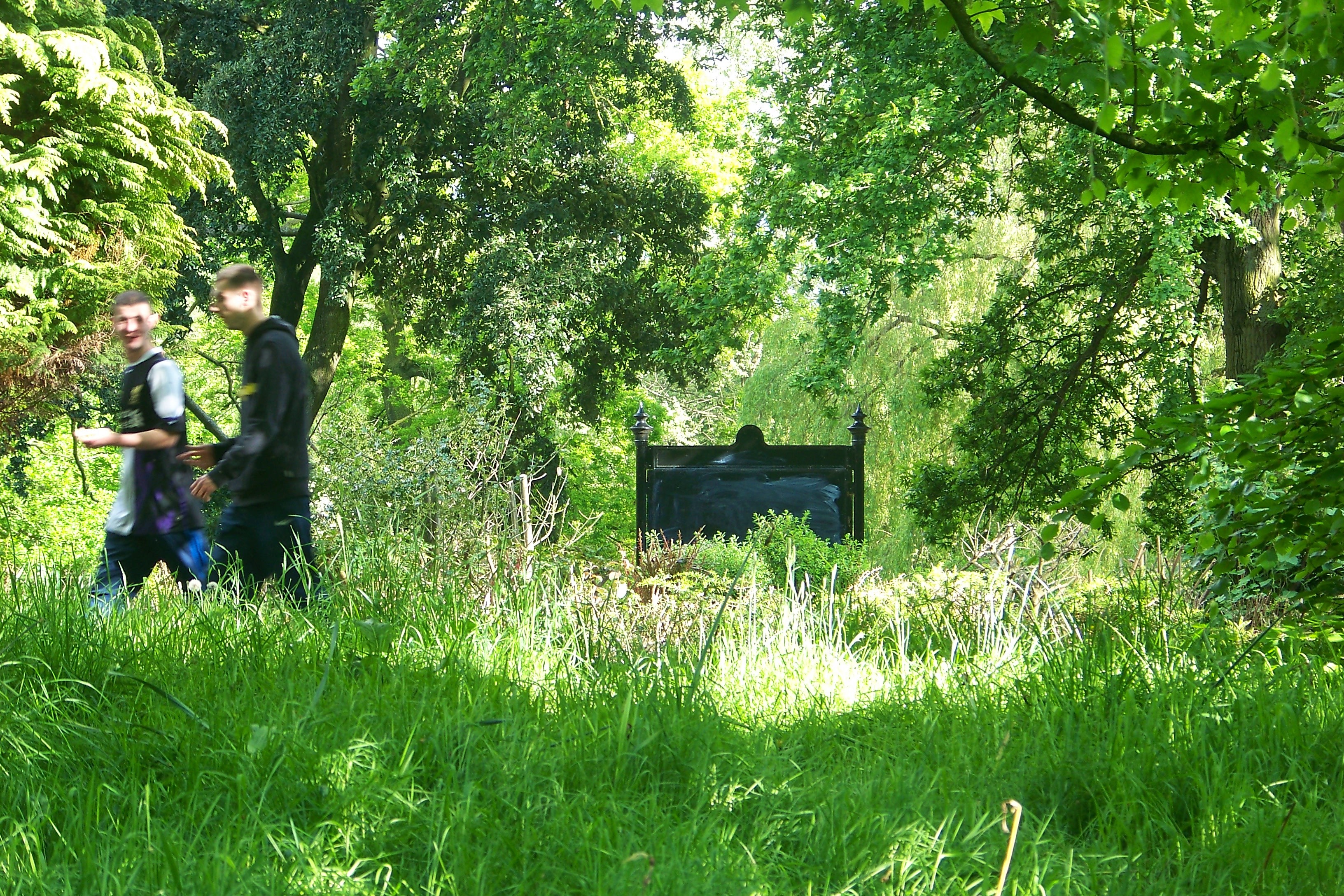
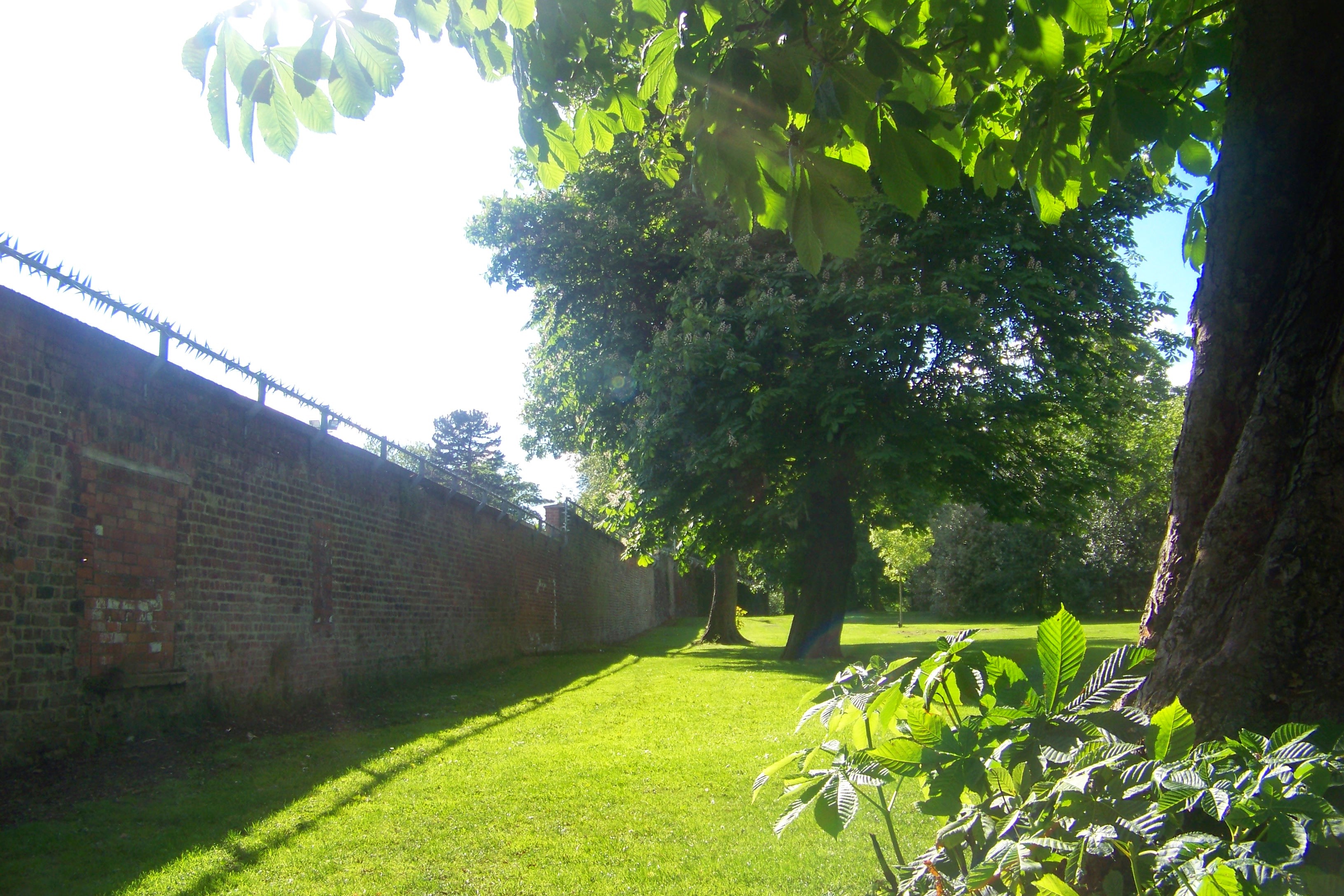
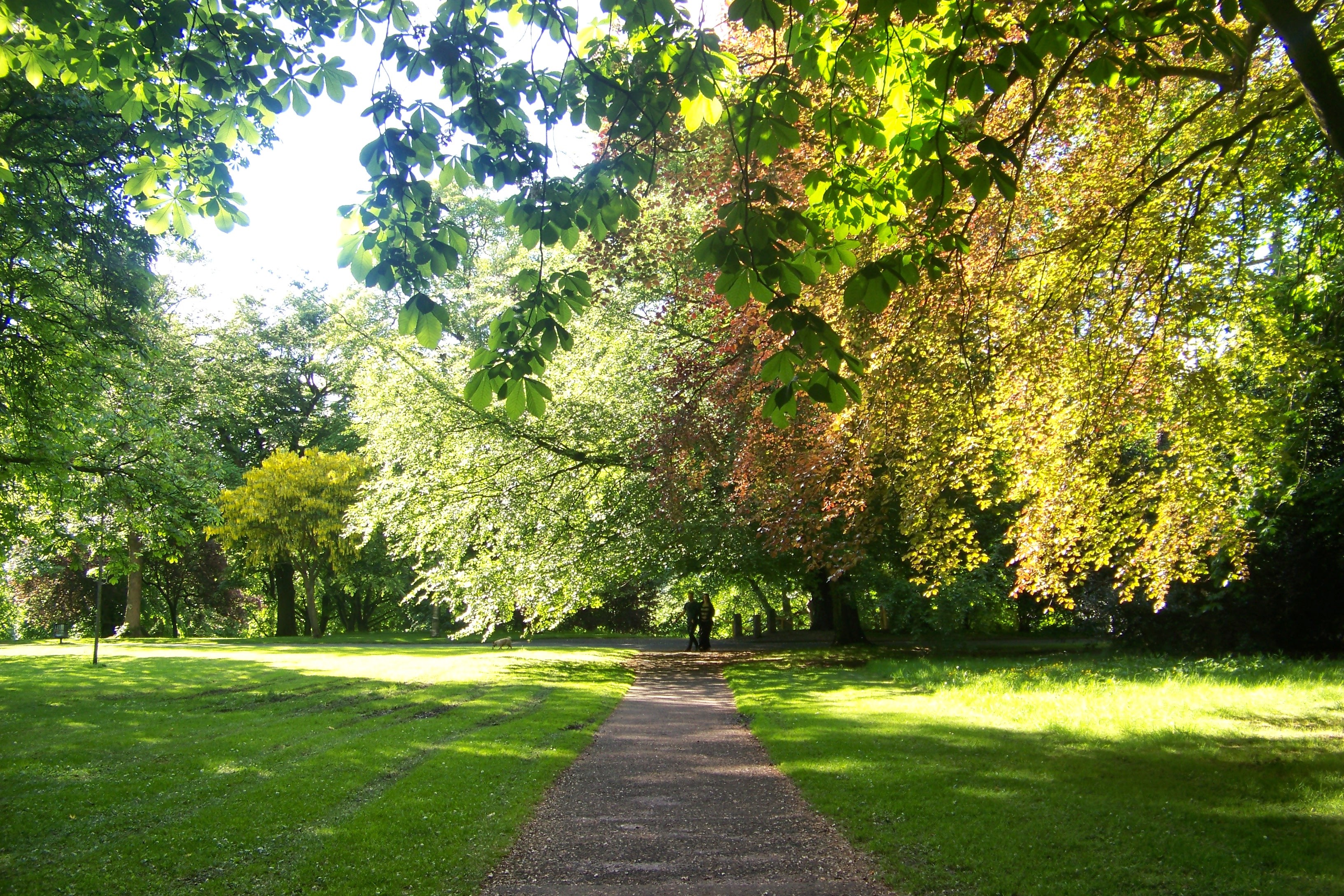
Somewhere in the Ormeau, on the lawn under the red cedar, all the trees surround to muffle the noise of the city, that this park would never have known as quiet.  The smell of pine and the damp cut grass.  A dog gambols past, with a cursory sniff.  They held a parade the day this place opened; how very typical of a city on the march.  Sold off to the Corporation by the Donegall family; the oldest park in the city.  Wander to the lions that guard the bowling green; their manes and snouts eroded, neglected.  Pedal round the wide pathways, past the tennis and basketball courts.  The exercise machines which lure the curious and unfit.  It quietens you; the green, the trees.

By the lake in Victoria Park in the east.  Watching the ducks.  It’s what one does in a park.  This place, found down a warren of streets and under a dual carriageway, how strange to find it here. Not through a wardrobe but an unprepossessing underpass.  But just as peculiar an entry and with a strange hint of magic.  Planes screech overhead, Samson and Goliath loom. The ferries pass back and forth up and down the Lough.  Sweet nurtured nature surrounded by industry and water.  Everywhere you think of flight.  And yet by the edge of the lake and sheltered from the docks, you can still lean against a tree, look no further than the copse further along and daydream.  That outside, that has vanished. The magic does its work.

There was a skating pond in Woodvale Park, but after the war it was filled in.  There was an outdoor bathing pool in Falls Park, but that was closed for health concerns.  The citizens are not safe on or in the water. Keep the parks safe; as safe as you can when there are people there. Since then, those high parks, with their views over the city and the lough, are they still islands of green serenity?  Sanctuary in the troubled waters that surround them?  Safer to walk a dog and kick a ball in the lane ways and lawns, while beyond the railings everything and everyone was drifting towards … was crashing like a tide on each other.  Better to detach and drift, amongst the meadow flowers of early spring, the blossom that blooms so briefly then scatters like confetti as the days grow longer.  Under the trees and down by the stream.

Ceardha Morgan Vernacularisms

The park; the democratic place; free for all.  But here in this city, even tiny islands are divided.  Walk to Alexandra Park’s wall.  With a helpful door for the daylight hours. Not so magic entrance.  Are we sharing the space, to walk, to march, to run, to play? Some islands are occupied territory.  Claimed by the citizens who surround them.  No entry for those of a different tribe.  No daring to raid; escape is treacherous; as much in the mind as in fact.  Better to stay near, don’t stray is the thought.  Don’t explore.

No such thing as a truly shared space; James Craig threatening the liquidation of the enemy in the Ormeau Park. Murders at the Waterworks.  Idle swans gliding, while men do their worst.  Violence seeps in; nothing is really tamed.  Now we hear of youths from both tribes, those Lost Boys finding their own islands, arranging their tribal fights in parks away from the Landrovers.  Liquidating each other?  Or re-living the actions, the fears and the follies that followed even those men and those women in those pictures of the parks back then, long ago.

But.  But away from the fluttering coloured scraps of cloth that denote the demarcations.  And the rhetoric and fear.  Away from even ordinary monstrousness.  Inside the gates, down the pathways, round a corner and on a bench with rhododendron and beech and oak.  A sight of yew.  The sycamore’s palmspread leaves.  You can rest.  While songbirds dart and wheel and speak in their own tongues; and the twitching in the undergrowth is what you hope are rabbits, and the squirrels bound and leap. Away from the bands and the protests and the walls that close at night, these island-parks allow a little lotus eating.  A place to let your mind wander, a place to let yourself forget and simply be. Go today.

Ceardha Morgan Vernacularisms

Posted in Uncategorized | Tagged , , , , , , , , , , , , , , , , , , , , , , , , , , , , , | 2 Comments